
Every business generates data. And at some point, the hardware storing that data reaches end of life. What happens next is where many businesses in the UAE drop the ball.
Tossing old hard drives in a storage room or shipping them off to a general recycling facility without proper destruction is a liability waiting to surface. A single improperly disposed drive can expose customer records, financial data, employee information, and trade secrets.
Choosing a credible hard drive destruction service is not a luxury reserved for large corporations in Dubai or Abu Dhabi. It is a necessity for any business that handles sensitive information, which, frankly, is all of them. With the UAE’s data protection landscape tightening considerably in recent years, the stakes have never been higher.
1. Verify the provider’s certifications before signing anything.
The first thing to scrutinize is whether a destruction provider holds certifications that carry real weight in the industry. Look specifically for NAID AAA certification, issued by the National Association for Information Destruction. This credential signals that the provider has passed unannounced audits, maintains documented chain-of-custody procedures, and employs vetted staff.
In the UAE context, also check whether the provider aligns with the requirements of the UAE Personal Data Protection Law (Federal Decree-Law No. 45 of 2021). Businesses operating in the Dubai International Financial Centre (DIFC) should additionally look for providers familiar with the DIFC Data Protection Law, which has its own set of obligations around data disposal. A provider that cannot speak to these local regulatory frameworks is not one you want handling your drives.
2. Request a documented chain of custody for every job.
When a hard drive leaves your premises, you need a paper trail that accounts for every step until destruction is confirmed. Ask potential providers exactly how they document chain of custody. You want a process that includes serial number logging, secure transport manifests, and a Certificate of Destruction issued at the end of the job.
Some providers scan each drive individually before pickup, assign it a unique tracking number, and send updates throughout the process. That level of specificity is what separates a trustworthy data destruction company from one that simply collects and hauls hardware. In the UAE, where free zone regulations such as those governing ADGM businesses may impose additional documentation requirements, a detailed chain of custody is not just good practice. It is a compliance necessity.
3. Understand the difference between on-site and off-site destruction.
Not all destruction methods are created equal, and your industry may determine which one is non-negotiable. On-site destruction means a mobile shredding unit comes to your location and physically destroys drives in your presence. You can watch the process, receive a Certificate of Destruction the same day, and eliminate the risk associated with transporting drives across the city.
Off-site destruction involves drives being transported to a secure facility. This is a legitimate option, but it depends heavily on the quality of the transport process. Vehicles should be GPS-tracked, locked, and operated by background-checked personnel. Businesses in regulated sectors such as banking and finance, healthcare, and government-linked entities in the UAE should treat on-site destruction as the more defensible choice, particularly when preparing for regulatory audits by bodies such as the UAE Central Bank or the Health Data Office.
4. Ask specifically how destruction is carried out.
“We destroy your drives” is not a method. Push providers to be specific about their process. The two most widely accepted methods are physical shredding and degaussing. Shredding reduces a drive to small metal fragments, typically in compliance with NIST 800-88 guidelines, which many UAE-based multinationals and government contractors reference as a benchmark. Degaussing uses a powerful magnetic field to scramble data, though it is only effective for magnetic media and does nothing for solid-state drives.
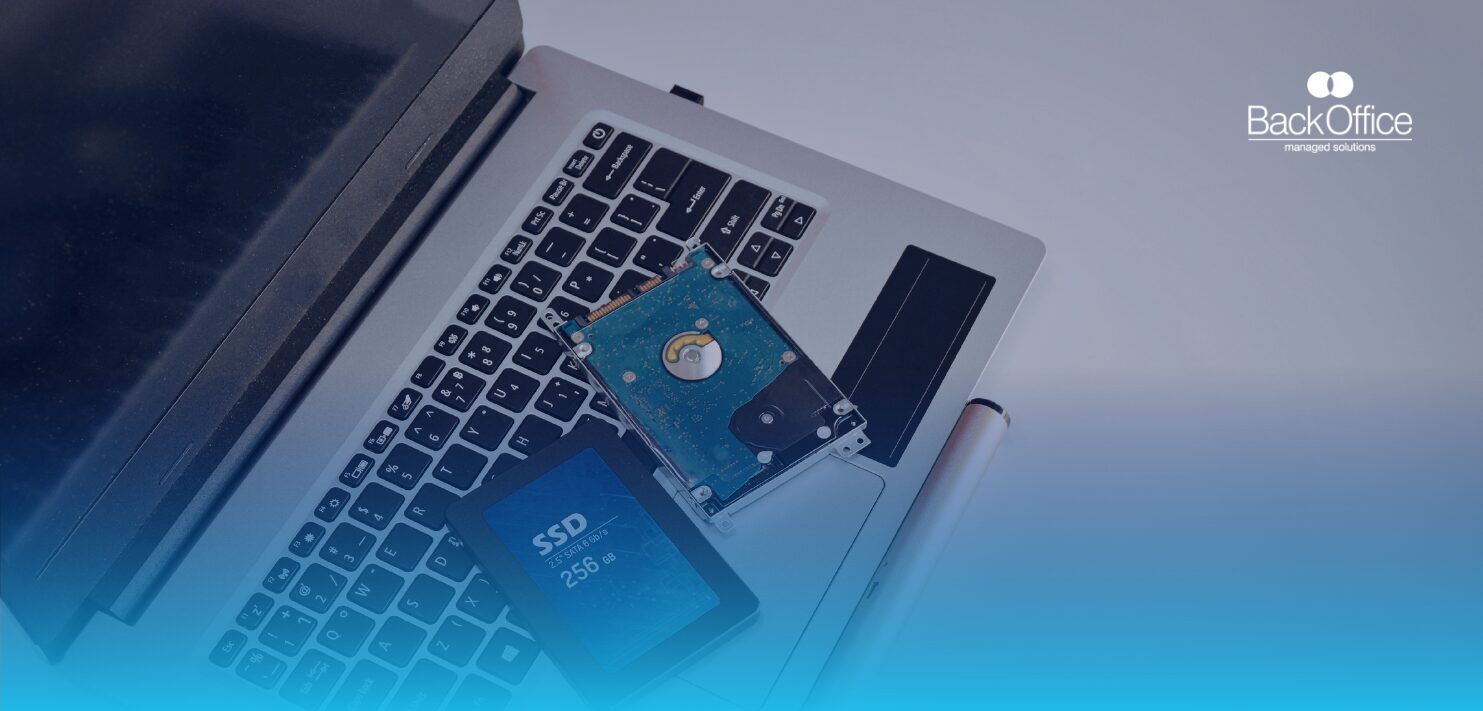
For SSDs and NVMe drives, physical destruction is the only method that provides verifiable data elimination. A reputable hard drive destruction service will know this distinction and tailor its approach based on the type of media you are handing over, rather than applying a blanket process across different drive technologies.
5. Check whether the provider carries adequate insurance.
Something UAE businesses routinely overlook is liability coverage. If a provider loses a drive in transit or a data breach occurs because of mishandling on their end, who absorbs the financial fallout? Before committing to any secure data disposal vendor, ask for proof of general liability insurance and errors and omissions coverage, with policies valid and enforceable within the UAE.
The coverage amounts should be proportionate to the sensitivity of your data. A provider operating across Dubai, Sharjah, and Abu Dhabi that carries only minimal insurance is not positioned to protect your business in any meaningful way. Get this documentation in writing before any drives change hands, and have your legal team review it if your data volumes are significant.
6. Compare pricing without letting cost lead the decision.
Cost is a consideration, but treating it as the primary filter is how businesses end up with unreliable providers. Get itemized quotes from multiple companies so you can compare what is actually included. Some providers charge per drive, others per job, and some bundle transportation into a flat fee while others list it separately.
Be wary of quotes that fall well below the market rate in the UAE. Suspiciously low pricing can indicate unlicensed operations, inadequate security controls, or a provider that resells drives rather than destroying them. Given that the UAE has seen a steady rise in cybercrime incidents targeting businesses of all sizes, the price difference between a vetted destruction provider and a cut-rate alternative is negligible compared to the cost of a data breach, a regulatory penalty, or reputational damage in a market where trust travels fast.
7. Check client references and publicly available audit results.
Before committing to a provider, ask for references from businesses in your sector. A company that regularly handles drives for UAE banks, healthcare providers, or government contractors operates under considerably higher scrutiny than one whose client base is limited to small trading firms. Their familiarity with sector-specific compliance requirements translates directly into a smoother experience for you.
Some NAID-certified providers publish their audit history or make summaries available on request. In a market like the UAE, where word-of-mouth carries significant weight across business communities in Dubai, Abu Dhabi, and Sharjah, a provider’s reputation among established local clients tells you more than any brochure.
Let Back Office Take the Guesswork out of Record Disposal
Back Office provides comprehensive record disposal services for businesses across the UAE that cannot afford loose ends when it comes to sensitive data.
From secure document shredding to certified hard drive destruction, Back Office handles the full lifecycle of your physical records with documented chain-of-custody procedures, certified destruction, and full compliance support aligned with UAE data protection requirements.
Whether you need a one-time purge or a scheduled disposal programme, the team brings the same rigorous standards to every job. Your data does not just disappear; it is verifiably gone.